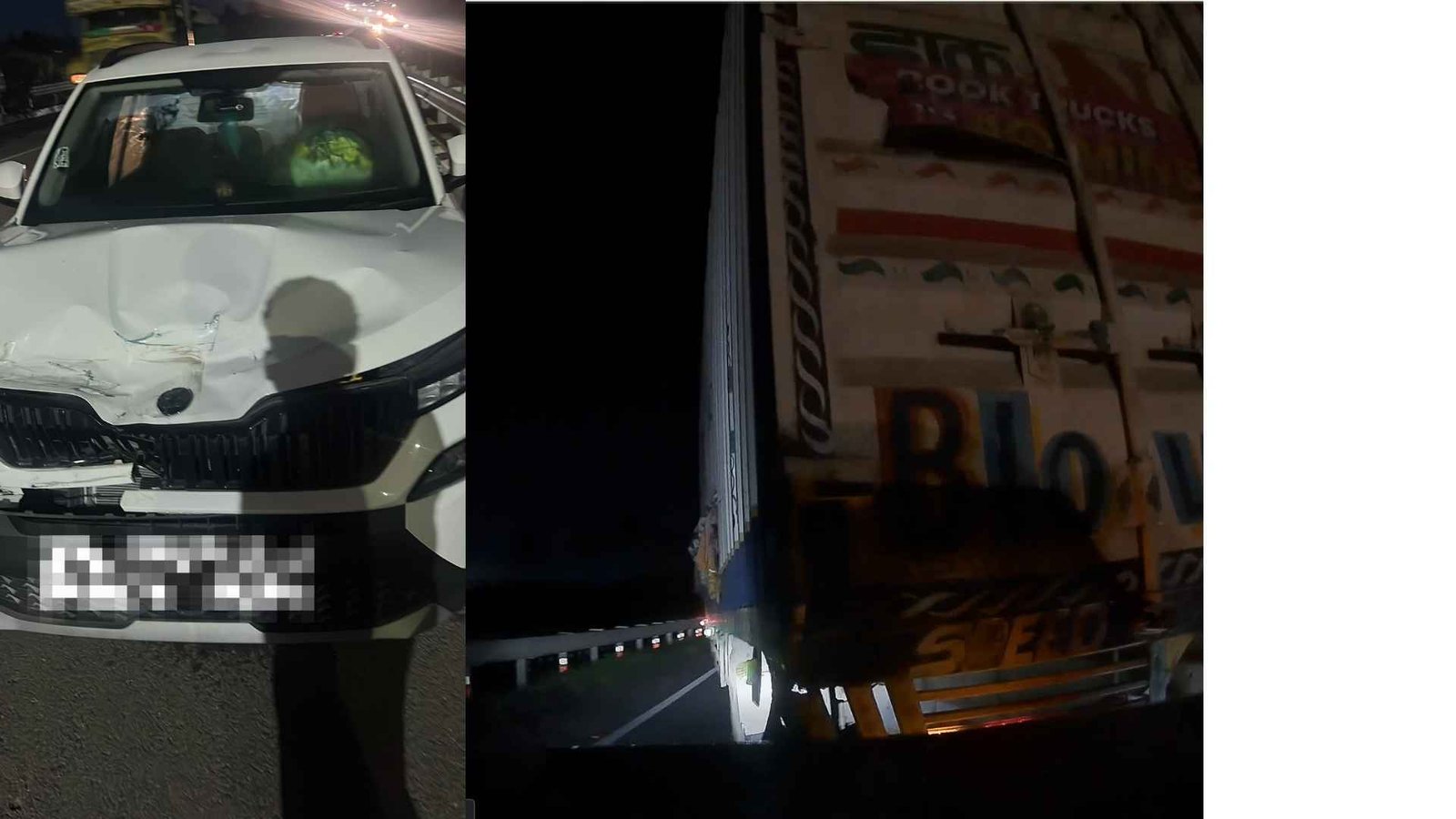
On 22 August 2026, around 4:30 am, we were driving on the road adjacent to Satellite Road near Hoskote(Karnataka). I was doing about 60. A truck ahead of us was reversing on the main road. It did not stop. It hit us and drove off. Reversing was not an option as there were many vehicles coming with high speed.
The front of the car took most of the damage. All of it is on my dashcam, including the registration number.
What happened after
The car was not drivable. We parked it on the roadside and called 112 and roadside assistance together. My first concern was getting my family home.
112 connected us to a local patrol almost immediately. They asked whether anyone was injured and whether we needed an ambulance. Once we confirmed we were fine, they came out, about 40 minutes later. They took our details, photographed the scene and shared it with the nearest station, Sullibele.
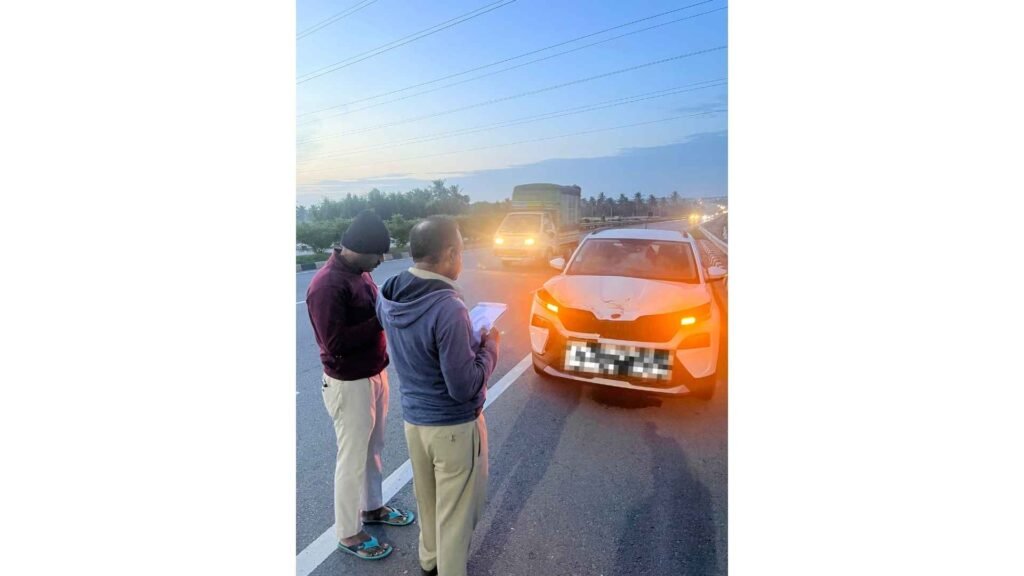
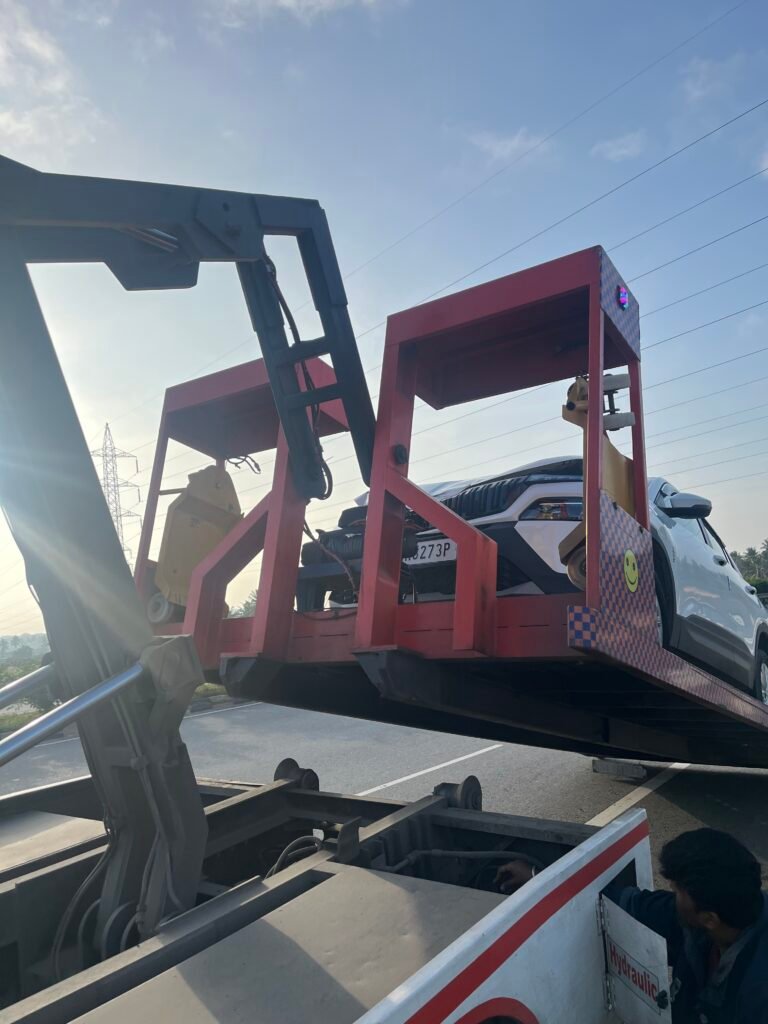
By then my brother had reached with an Uber outstation. That driver was decent about the whole thing and took my family back to Bangalore. The patrol left once they were satisfied we were okay. RSA arrived and towed the car to the Skoda showroom in Bangalore.
About two hours later I went back to Sullibele station, again by Uber outstation, to file the FIR.
I could not file it.
Where it stopped
The station explained that the car had to be towed to the police station and produced there. It would sit in the compound for four or five days. After the FIR was filed, they said, they would trace the vehicle.
I want to be fair here, because this is not a story about anybody behaving badly. The 112 response was fast. The patrol was prompt and considerate. The station explained the requirement instead of brushing me off. Every individual in this story did their job.
The problem is what the job requires.
By that point I had been up since 4:30, sent my family home in a hired car, made two long trips myself, and was now being asked to park a damaged car in a police compound for a week on top of the weeks it will already spend in a workshop. Insurance will cover most of the repair. The rest of the cost is mine.
So I ran the numbers and I did not file. The vehicle number is sitting on my dashcam and nothing has been done with it.
The part I keep coming back to
I was not at fault. I was at a reasonable speed on a road where I had every right to expect the vehicle ahead of me to be moving forward. I stopped, called 112, stayed at the scene, went to the station. I did everything I was supposed to do.
And I was still the one being asked to spend more time, more money and more effort to hold him accountable. He drove away at no cost to himself. I was the one who had to keep paying to make anything happen.
That is what I did not understand until it happened to me. The system does not fail because the evidence is missing or because nobody cares. It fails because the entire cost of pursuing a case sits with the person who was hit. Which means it quietly filters by what you can afford, not by what you can prove.
What would have changed the outcome
- Let clear dashcam footage with a readable number plate be enough to register the case, with the vehicle inspected at the workshop rather than the police compound. The car is at an authorised service centre with a job card and a VIN. It is not going anywhere.
- Allow the report to be filed without repeated trips. The law already permits information about a cognizable offence to be given electronically. For a case like this, that should be the normal route.
- Tell the complainant what came of it afterwards. If nothing comes back, people stop reporting, and then the numbers say there is no problem.
None of that is expensive. It mostly changes who carries the cost of reporting.
The footage exists. The number plate is readable. The patrol’s photographs exist. Everything needed is already on record, and it will most likely stay there.